
Are Nigeria’s Violent Attacks Driven by Politics, Religion, Poverty—or Something Deeper?
By Aina Shehu Adekunle
Nigeria’s Security Crisis Deepens — But What Is Really Driving the Killings and Mass Abductions?**
Nigeria is confronting yet another devastating wave of violence, forcing the country to confront a haunting question: What exactly is going on? The recent coordinated abductions of schoolchildren and attacks across several northern states have reignited a national debate on the real forces behind the country’s persistent insecurity.
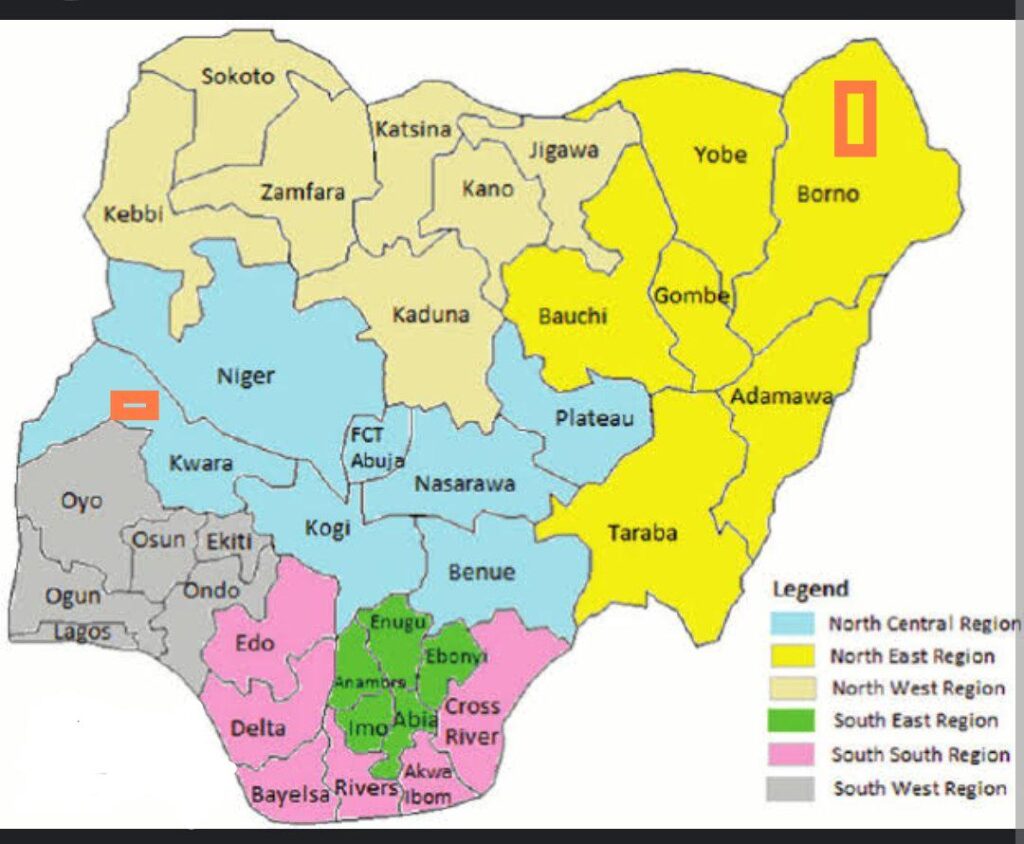
From Niger to Kebbi, Kwara, Katsina and beyond, terrorists have launched attacks on schools, churches and rural communities, abducting scores of children and teachers—and leaving the country shaken. The pattern is troublingly familiar, yet increasingly complex.
A New Wave of Attacks—Same Old Pain
On November 15-16, a Brigadier General of the Nigerian Army was ambushed and killed, on November 18, 24 female students were abducted and the school’s vice principal was killed during an attack on a girls’ secondary school in Kebbi State. A day later, on November 19, gunmen struck a church in the Eruku area of Kwara State, killing several worshippers and kidnapping others.
The latest assault occurred at St. Mary’s Catholic Primary and Secondary Schools in Papiri, Niger State, where terrorists hauled away an unconfirmed number of students and teachers in a midnight raid. This came barely 48 hours after 25 girls were abducted from a school in Kebbi and bandits stormed a church in Kwara.
In response, President Bola Ahmed Tinubu cancelled his trip to South Africa for the G20 Summit to receive continuous security briefings—an indication that the government recognises the gravity of what is unfolding.
Security agencies have since launched massive rescue operations, combing forests and riverine routes, while military airstrikes target identified terrorists’ enclaves.
But beyond the immediate response lies the bigger question: Why is this happening over and over again?
⸻
Is the Crisis Political?
The timing and coordination of the attacks have led some political actors to suspect a wider agenda.
Senator Sunday Steve Karimi described the abductions as attempts by “mischief makers” to discredit the Tinubu administration—a claim reflecting fears that insecurity could now be a political tool in the struggle for influence and destabilisation.
With elections always around the corner in Nigeria’s charged political climate, some analysts believe that violent groups are being funded, exploited or enabled by political interests to weaken opponents or undermine the ruling government.
⸻
Is It Religious Extremism?
Many targeted locations—including a Catholic school and a church—revive old concerns about extremist ideologies still circulating in the north.
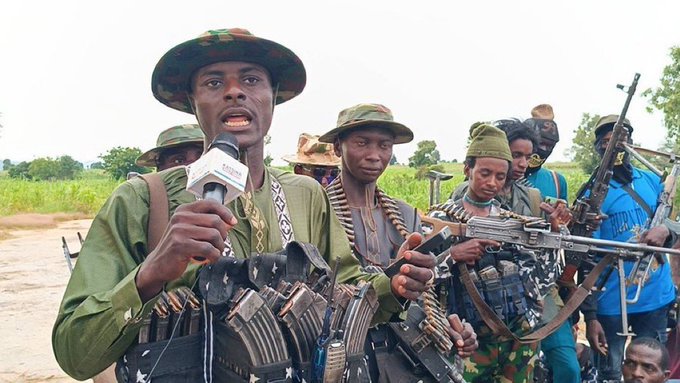
For over a decade, terror organisations like Boko Haram and ISWAP have justified kidnappings, forced conversions and attacks on schools as part of a warped religious philosophy that rejects Western education (“Boko Haram” literally means “Western education is forbidden”).
While security agencies have neutralised several extremist commanders this year, loyalists often respond with retaliatory attacks—such as the recent abductions allegedly linked to the killing of terror commander Babangida by Nigerian Air Force strikes in Niger.
⸻
Is Poverty and Unemployment Driving the Violence?
Nigeria’s worsening economic situation, youth unemployment and shrinking opportunities are also major drivers.
In many rural communities, armed banditry has become a lucrative survival strategy. Guns are cheap, victims are vulnerable, ransom payments are profitable, and the risk of prosecution is low.
Entire criminal networks operate around kidnappings—recruiting jobless youths, bribing local informants and exploiting desperate communities who feel abandoned by the state.
Without addressing poverty and unemployment, experts warn that security operations alone may not end the crisis.
⸻
Is Bad Governance at the Heart of It All?
Weak state presence, failing institutions and poor compliance with security directives also aggravate the situation.
In the Niger school abduction, the government revealed that St. Mary’s School ignored a security instruction to shut down operations due to intelligence warnings. The result was a preventable tragedy.
Similarly, in Kebbi State, the governor questioned why military personnel deployed to a school were withdrawn just 45 minutes before terrorists attacked—raising uncomfortable questions about operational lapses, negligence or even sabotage.
Governance failures—at local, state and federal levels—create the vacuum that terrorists exploit.
⸻
Or Is It a Mix of All These Factors?
Nigeria’s current security breakdown is not rooted in a single cause. It is a tangled web of overlapping forces:
• Political manipulation
• Religious extremism
• Banditry and criminal opportunism
• Economic hardship
• Governance failures
• Weak security infrastructure
• Ethnic tensions and land-use conflicts
• Retaliatory attacks by terror factions under pressure
Understanding the crisis requires acknowledging that Nigeria’s insecurity is multi-layered, evolving, and deeply embedded in long-standing structural challenges.
⸻
A Nation Searching for Answers
As northern governors call for aggressive action, religious bodies plead for prayers and communities bury their dead, one truth looms large:
Nigeria is running out of time.
The closure of 47 Unity Colleges, shutdown of all schools in Katsina, and evacuation of students in Plateau State shows how insecurity is now redrawing the nation’s educational map. If children cannot safely attend school, a generational crisis looms.
The rising attacks are a painful reminder that insecurity is not just a security problem—it is a national emergency affecting education, governance, the economy, politics and national stability.
⸻
Where Does Nigeria Go from Here?
Experts say the country needs a multipronged approach:
• Strengthen intelligence networks
• Enforce community security outfits
• Eliminate political interference in security operations
• Improve state–federal coordination
• Address poverty and unemployment
• Strengthen border control
• Prosecute collaborators and internal saboteurs
• Invest heavily in school security infrastructure
Until these measures are pursued with consistency, sincerity and political will, the question will remain:
What is truly fueling Nigeria’s descent into violence? And how long before the nation reaches its breaking point?